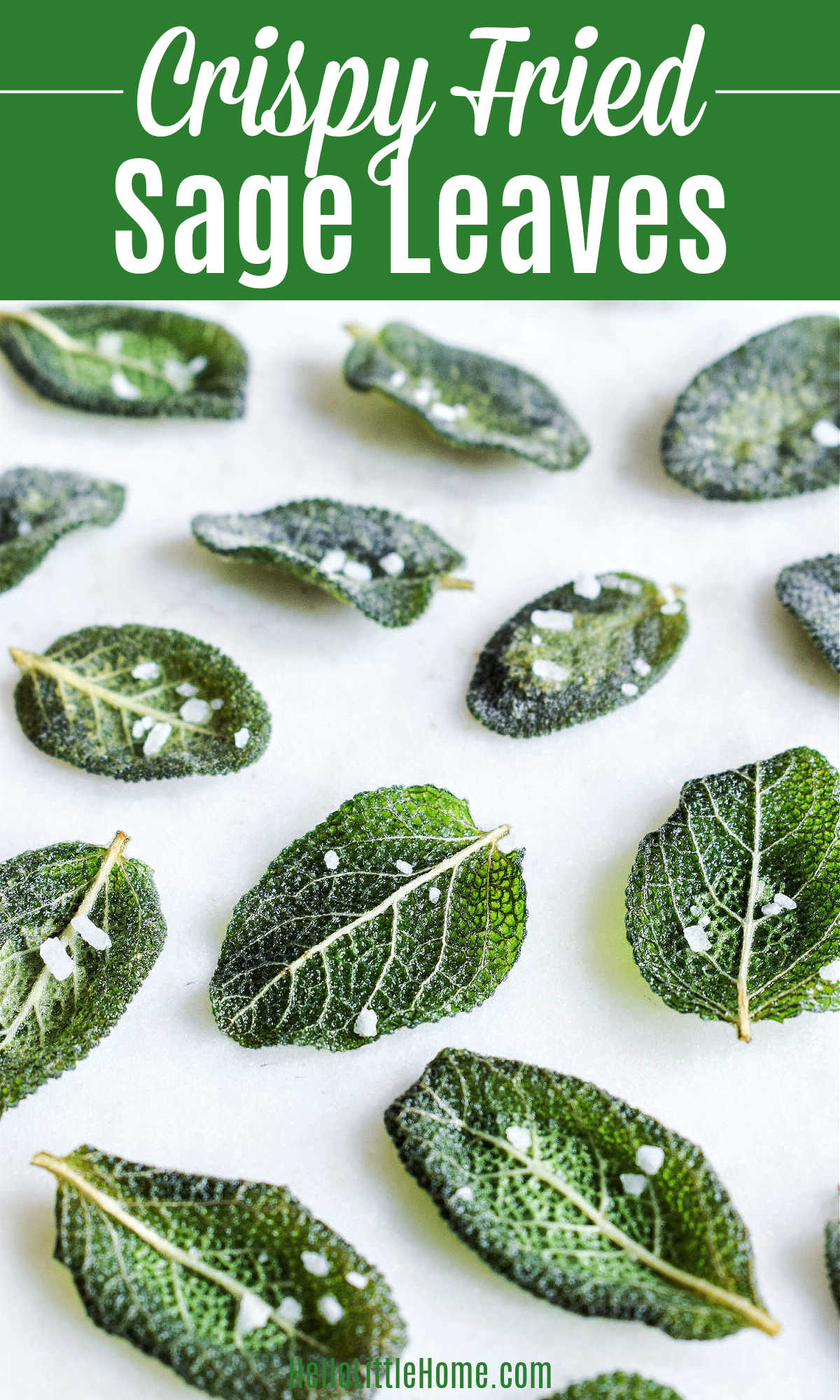
Learn how to make Fried Sage! These Crispy Sage Leaves are super quick and easy to make, plus so delicious. They make a wonderful snack, or you can use them to garnish your favorite recipes (pasta, salads, soup, and more)!

This post contains affiliate links. As an Amazon Associate I earn from qualifying purchases.
Ginnie's Take
Have you ever tried frying sage? Raw sage has a strong earthy, piney flavor, but frying the leaves turns them into a milder, nuttier tasting treat with a light, crunchy texture! These Crispy Fried Sage Leaves are so delicious and unexpected. You can use the leaves whole or crumble them up, snack on them, or use them to garnish you fave dishes.
Why You'll Love This Recipe
- Delicious Flavor - These crisp leaves have a truly scrumptious flavor that you won't be able to resist. Whenever I make this recipe, I have to hold myself back from eating the whole batch as soon as it leaves the pan!
- Easy to Make - You need just three ingredients for this recipe, and the crunchy leaves are ready in mere minutes. So simple!
- Great Way to Use Leftover Sage - Have extra sage that you need to use up? Then this is the perfect recipe for you!
- Versatile - Use the leaves as a snack (in Italy, there's a similar aperativo known as salvia fritta), or use them as a garnish for pasta, salads, appetizers, and so much more. You'll find lots of ideas below!
Jump to:

Ingredients
You need just three ingredients to make this easy recipe:
- Sage - Of course, you'll need some whole fresh sage leaves! For the best results, use the freshest leaves (with no blemishes) that you can find.
- Olive Oil - You'll use extra virgin olive oil for cooking the leaves. Butter can also be used.
- Salt - A sprinkle of salt is a tasty finishing touch! I recommend using kosher salt.
This recipe is naturally vegetarian, vegan, gluten free, dairy free, and nut free, which means almost anyone can enjoy it!
You'll Also Need
You will need a medium frying pan (or larger, depending on how much sage you have) for frying the leaves, as well as paper towels to absorb excess oil after they're done cooking. I recommend using tongs to remove the leaves from the oil, although a spider strainer would also work.

How to Fry Sage Leaves
This Crispy Sage couldn't be easier to make! You'll find a detailed recipe card below, but here's a quick overview of the steps:
- Heat oil. Start by heating the olive oil in a medium frying pan until hot. Tip: There should be enough oil to coat the bottom of the skillet.
- Cook leaves. Add the leaves in a single layer, then cook just until they turn dark green. Tip: There's no need to flip the leaves. As long as you use enough oil, the leaves will cook on both sides.
- Drain leaves. As soon as the leaves turn dark green, transfer to a paper towel lined plate.
- Season with salt. Sprinkle the leaves with a pinch of salt.
Wasn't that simple? And once you get comfortable with making Fried Sage you really don't need to measure anything out! It's more of a process, than a strict recipe.

Tips for Success
This recipe is hard to screw up, but here are a few tips that will ensure your success:
- Test One Leaf First - To make sure the oil is the right temperature, start by frying one leaf. If it doesn't sizzle, heat the oil more before adding the other leaves. If the leaf immediately turns brown, the oil is too hot (it shouldn't be smoking hot). Remove your pan from the burner for a minute before proceeding.
- Cook in Batches - While it's tempting to cook many leaves at once, it's better to work with smaller batches. The sage cooks fast, and it will keep cooking until it's removed from the oil. If you cook too many leaves at once, some of the leaves may burn before you can rescue them from the oil.
- Have Paper Towels Ready - Set up your paper towels before you start cooking. That way, you aren't scrambling against time.
- Use Tongs - A pair of tongs makes it easy to quickly remove the leaves from the oil.
- Go for Dark Green - You want to avoid browning the sage, which can make it taste bitter and burnt. Remove the sage as soon as it changes color and turns dark green.
How to Use
There are so many ways to use this versatile herb! You can use Crispy Sage Leaves whole, and you can crumble them into dishes, too. Here are some ideas to try:
- Snack - Honestly, I love snacking on these crunchy leaves. Once you try one, it's impossible to resist another. They're kind of addictive! Italians even serve them as an aperativo (often cooked in a crispy batter).
- Cheese Board - The next time you make a Cheese Plate, add a small bowl of the leaves.
- Other Appetizers - This is the best for topping apps and snacks! I garnished this Butternut Squash Crostini with these crispy leaves. You can use the leaves to garnish bite sized appetizers, like deviled eggs or these Mini Cheese Tarts, too.
- Salads - Garnish your fave salad with whole leaves or crumble the leaves in before tossing. They'd be delish in this Warm Farro Kale Salad.
- Pasta - This is probably my favorite way to use these crispy herbs, especially paired with fall pastas! I used them to make this delectable Delicata Squash Pasta, they're a classic in gnocchi with brown butter and sage, and they're tasty in other dishes, like ravioil, too.
- Soup - Use them as finishing touch for your favorite cozy soups. They'd be lovely paired with this Vegan Roasted Pumpkin Soup or this Creamy Kale and Potato Soup.
- Pizza - I added them to these yummy Mini Butternut Squash Pizzas (you could easily turn this recipe into a full-sized pizza), and they're be scrumptious on this Roasted Veggie Pizza, too!
- Risotto - Their crispy texture is a lovely contrast to creamy rice. Use them as a topping for this Pumpkin Risotto recipe!
- Eggs - Sprinkle the leaves over fried eggs, or fold them into scrambled eggs.
- Sides Dishes + Veggies - Serve over cooked veggies, or use the leaves to garnish your Holiday Stuffing. Mix into rice or cooked grains (like Quinoa). Crumble the sage over roasted potatoes, or add it to mashed potatoes (pair it with this Garlic Mashed Potatoes recipe)!

Storage
Crispy Fried Sage is at its best when enjoyed shortly after making it. As long as your home isn't too humid though, the leaves can be stored in an airtight container (at room temp) for a day or two.
Related Recipes
Looking for more ways to use fresh sage? Check out these recipes next:
- This tasty Vegetarian Stuffed Delicata Squash is a fave fall dinner that's surprisingly easy to make.
- Sage is a classic dressing ingredient! You'll find it in my Mushroom Herb Stuffing and my Homemade Chestnut Dressing.
- This Stuffed Acorn Squash makes an amazing plant based holiday entrée!

Frequently Asked Questions (FAQs)
Fried sage will stay crispy for a day or two when stored in an airtight container at room temperature. However, if your home is hot and humid, I'd recommend eating it as soon as possible.
Yes, you can fry sage leaves ahead of time. Let the leaves cool completely before storing them in an airtight container at room temperature. They should stay crispy for a couple days.
Technically, you can fry sage in an air fryer, but it works much better on the stove top. In my experience, the leaves are so light that they will fly around the air fryer. I recommend frying them on your stove instead (it's just as fast, if not faster). If you'd like to try using your air fryer though, preheat it to 400°F (200°C). Spray the leaves lightly with oil, then cook them for about two minutes, checking on them frequently to make sure they don't burn.
No, you cannot fry dried sage. You need fresh sage leaves for this recipe.


Fried Sage Leaves
Ingredients
- fresh sage leaves (see note)
- extra virgin olive oil
- kosher salt
Equipment
- Paper Towels
- Medium Frying Pan (10-inches)
- Tongs
Instructions
- Wash and dry sage leaves. Cover a large plate with a couple layers of paper towels; set aside.
- Cover the bottom of your frying pan with about ¼ inch of olive oil (I used 3 tablespoons for a 10-inch pan). Warm oil over medium heat until hot.
- When oil is hot, add sage leaves in a single layer, carefully swirling pan to make sure leaves are covered with oil.
- Fry sage leaves just until they turn dark green, about 30 seconds to 1 minute (no need to flip). Immediately remove from oil using tongs. Place leaves on paper towel-covered plate. (Do not brown leaves.)
- Sprinkle sage with kosher salt, then serve. Enjoy!
Notes
Nutrition